System Context Analysis & Incident Response Engine Dev Journal 2
SCAIRE moves from Python to Laravel, finds a home on Forgejo, gets a domain and a demo video, and settles into closed beta.
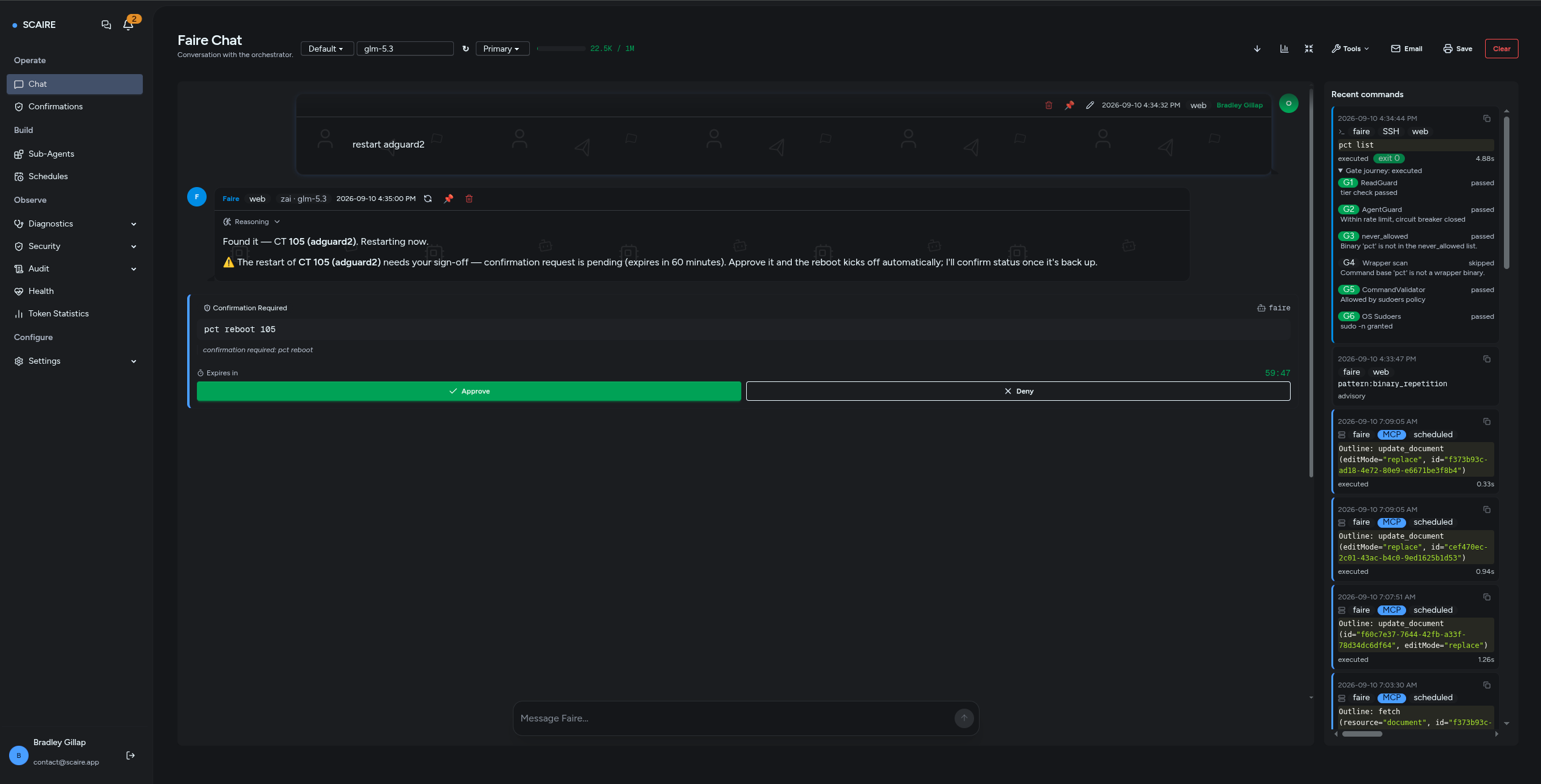
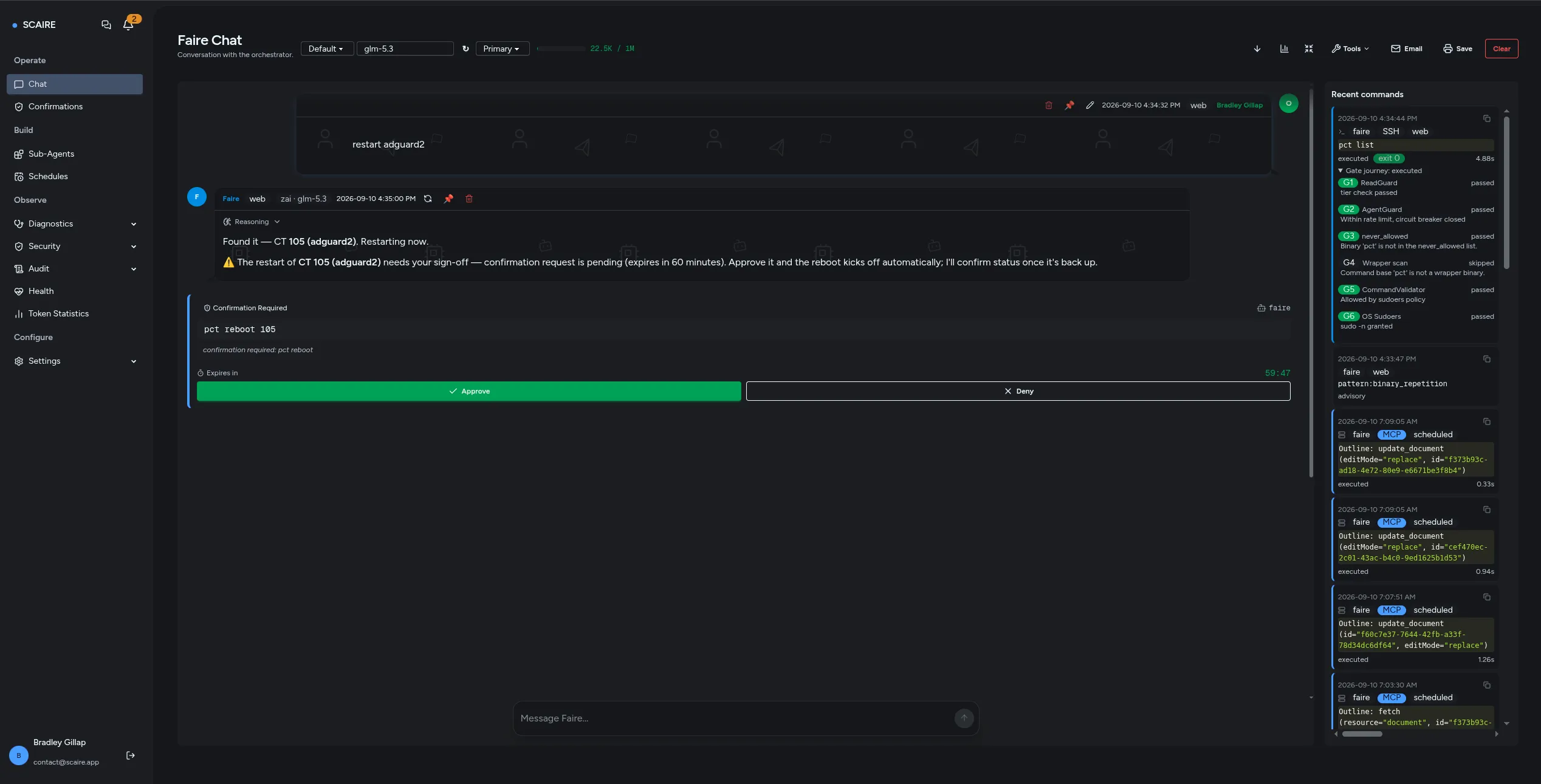
Fig. 1. SCAIRE Faire Chat confirmation screenshot
Source: Adapted from [1]
So SCAIRE has evolved a bit over time. I’ll go through a few decisions made along the way for the larger changes.
Change from Python to PHP + Laravel + Service Workers
Python is Great for Prototyping
Python was great, it let me do things like asynchronous requests for SCAIRE to run general diagnostics with multiple agents in tandem and provide reports and the path to turn SCAIRE into a browser based tool was always a long term goal I had. Where the Python started to fall apart was my patience (and horror) toward what was available in Python for handling things like web frameworks. I’ve had quite a bit of experience with things like Django in the past and just assumed I was exposed to these things because of legacy developer choices. I would come to understand that there just isn’t a lot of activity in the web space for Python and some of those clunkier systems were just the best Python had to offer.
Growing Security Concerns
I was using an LLM middleware called LiteLLM which was having growing security issues on a pretty regular basis. Truly a move fast and break things middleware project. There’s nothing wrong with LiteLLM, it actually works quite well if you can keep up with the constant framework changes. I know this comes after a rash of PHP concerns this week regarding security but when you consider PHP’s overall security track record and purpose built frontend centric systems, it’s hard to beat. There’s a reason much of the world runs on PHP.
Distribution
Even today I’m not very happy with the way SCAIRE needs to be installed and the amount of setup. I’ve written a bash installer that performs needed task on a typical Debian container but the experience of distribution with Python seemed worse and with virtual or venv Python environments, it was a barrier I just didn’t want to have to continue to deal with if I was going to share SCAIRE with closed beta testers. Today under PHP there’s a web based or CLI updater to a private repository. At some point I can control distribution of updates through that private repository if we get to the point of a public or paid release of the software.
At the current state, I’ve got the process down to about 4 commands to get a fresh SCAIRE installed with a special token I can provide the person installing it. This also paves the way for a situation where I can control all licensing for updates if necessary. The ground work is complete so that if I was to sell SCAIRE, it would just mean adding a payment processor to the website that could then generate accounts on a Forgejo installation through some simple API without need for me to distribute anything to a customer. It’s a lot more difficult to make the leap into business than to figure out the process to how to get people access to your software.
I know Docker is of course an option as well but I haven’t wished to expand the intention just yet which is an unprivileged LXC under Proxmox.
Frameworks Frameworks Frameworks, Laravel is AWESOME!
Laravel and PHP together are just a joy to work with. There is nothing quite like it out there that I’ve seen in software development and Laravel has been around a long time. I find Laravel moves a tad slower than other frameworks but they do EVERYTHING and that includes normalizing various transact database calls. Currently SCAIRE can operate on sqlite, mariadb, and postgres (recommended). Having backend DB options mostly opened up without having to manage DB write systems that are custom coded is just chef’s kiss. Laravel also offers a similar AI middleware framework to LiteLLM but they move slower, and have much less in the way of security issues. The developed features available to it have only improved SCAIRE and I haven’t felt as though I’ve been sitting on my hands waiting for anything particular from them on any front. There’s also a websockets streaming system called REVERB that helps the chat page render in a way that users might expect with a buttery smooth input/output.
Forgejo > GitHub
One thing I became critically aware of once I had decided to close the source of SCAIRE for now was that GitHub really ramps up the corporatization regardless if you are planning to make money or not from the thing you are building. I went down that path first and created an Organization, implemented some pipelines that do genuinely help reduce a few steps but felt the scale outpaced me. It was like being shoved into a world on GitHub that I didn’t ask for. One of my colleagues turned me onto Forgejo for some other personal projects which I began self hosting. The only downside is the lack of visibility or the grid that GitHub provides as a public facing indication of your progress on personal projects but these days with LLM’s, I would argue that has become a lot less useful as an overall metric or signal to others. Another casualty of the age of LLM.
Now, at least I get to control the code right at home in a rack I own which has other benefits and downsides. However, I can vouch that my uptime is much better than the various cloud providers even on a residential connection and power.
SCAIRE has a Web Domain Now!
I spent some time putting together a video, dusted off my condenser microphone, and some editing software. The video attempts to show what SCAIRE is as an assistant to your server infrastructure and how it connects several systems together for context. I still feel like the premise falls on deaf ears around most people I speak to. You see the wheels turning. Once I put someone in front of it and have them ask it for their top 10 favourite movies out of their Jellyfin and it spits out a response with reviews and some Rotten Tomatoes information they get a better sense. I wonder if maybe the zoom out of it is just difficult to engage with. Still at its core, when something stops working on my servers, I can send it a message and it’ll get to work providing me with all the context surrounding the event and which direction to begin moving in which was the original intention and we haven’t lost that at all.
Closed Beta
SCAIRE remains in closed beta. Fine tuning, squashing more bugs. It’s not a perfect system but it is not a hassle or uncomfortable to use either. I have found it to be a net benefit to my experience so far even with minor issues along the way. I’m still trying to determine if there is a need for this in the market as that is still unclear. I think it would do well as an open source piece of software but that’s one of the reasons it remains in closed beta and I continue to put effort into it. The business side of bringing it into a world of distribution and customer support is risky for initial capital. The nature of the project brings liabilities and risk that the legal world has not fully fleshed out yet (not that I believe SCAIRE would actually cause an issue) but it’s a deep consideration to something on the edge of tech like this.
As it stands, SCAIRE’s existence shows how I think about maintaining systems and implement brand new technologies to progress and automate workflows. Not terrible for interviews, and who knows, maybe the next place I work would like to leverage such a thing in house if their risk tolerance allows. It would definitely give any internal team or MSP a huge edge over their competition if they were able to deploy it and take some of that cognitive load off of managing several systems.
One of the things I have SCAIRE doing for me right now in my own homelab is just making sure my Wiki documentation stays congruent with what is actually happening on the servers, so every day there’s a scheduled topic for the wiki. SCAIRE reviews the systems, reviews the wiki and then makes any minor adjustments to things like:
- Network diagrams.
- IP addressing.
- Last update time.
Several living documents if you will. Gluing those bits together, an LLM provider, an MCP Server, and a Wiki takes a bit of consideration though and it’s those people, that need to have those considerations that I think I need to figure out how to find for more testing.
Next Dev Log
I’m about to do some closed beta testing with a few other people of the system which is very exciting. I’ll put together a survey and gather their comments and that’ll probably be the article of the next Dev Log about SCAIRE and how it’s going.
I also had an idea about how to work CVE and update notifications or recommendations.
References
[1] B. Gillap, "SCAIRE Faire Chat confirmation screenshot," *bradgillap.com* 2026. [Online]. Available: https://bradgillap.com Accessed: Oct. 29, 2026.